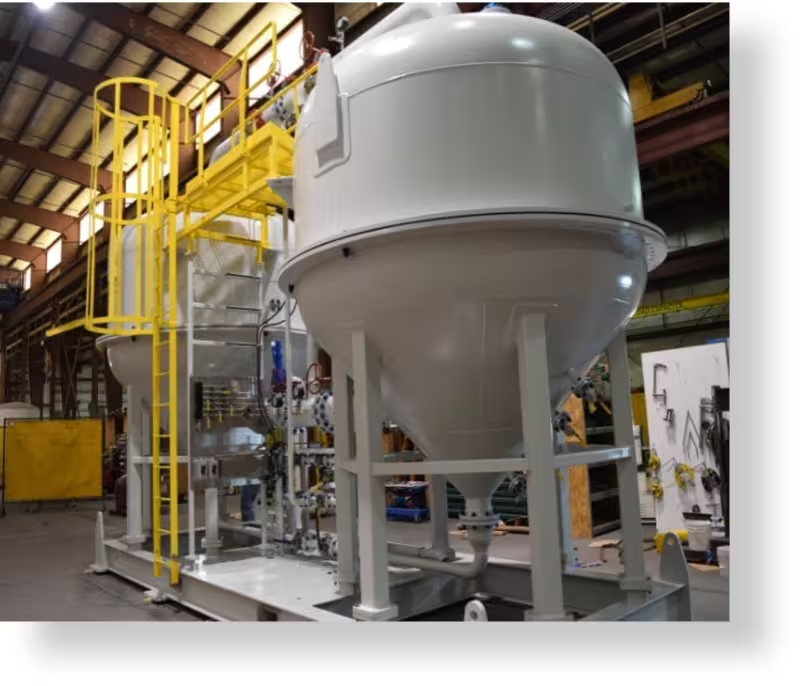
MYCELX is moving its water treatment technology into the Permian Basin, betting that a system built in the wake of the 1989 Exxon Valdez oil spill can win a place in one of the country’s busiest oilfields. The company said its MAC and REGEN systems can recover oil from produced water, collect suspended solids and prepare the water for disposal or reuse.
The push matters because the Permian Basin generates vast volumes of produced water that operators must either dispose of or process for other uses. MYCELX said the technologies can be used before water goes to saltwater disposal wells, or as pretreatment for systems aimed at beneficial reuse, desalination or evaporation. Garrett Rasor said the paired offering is designed for that market.
Hal Alper developed the MYCELX polymer after the Exxon Valdez spill, and he later co-founded MYCELX Technologies with petroleum industry veteran John Mansfield Sr. in 1994. The polymer permanently and chemically bonds hydrocarbons on contact rather than simply filtering them, a distinction the company says has helped it grow into a global water treatment provider with experience onshore and offshore.
Rasor said MYCELX offers the MAC, or MYCELX Advanced Coalescer, and REGEN, the Regenerative Media Filter, for Permian Basin clients. The company said the combined technologies can recover 99% sales-quality oil from produced water while also collecting suspended solids. REGEN is a backwashable media filter that generates recycle-quality water that can be placed in a frac pond or sold to a midstream or treatment company.
The company has already put that pitch to the test. Jim Weidler said MYCELX was awarded its first field-scale project using REGEN in the Permian Basin in November, by a major midstream operator, and that the system is expected to begin operations in the third or fourth quarter. He also said a pilot study with a supermajor operator in the Delaware Basin used the two-stage MAC and REGEN setup.
After three months and 55 days of data collection, the company said the pilot showed the paired technologies could receive produced fluids from the pipeline and beat the less-than-15-parts-per-million specification for oil and grease. The average effluent oil-in-water measurement was 11.64 parts per million. That result gives MYCELX a concrete number to carry into a market where marginal gains in water quality can shape what happens next with the water stream.
Weidler said the project is “the company’s showcase,” and the company hopes to eventually offer its PFAS treatment technology in the Permian Basin as well. For now, the immediate contest is simpler: whether an approach born from an oil spill and refined over decades can carve out a durable role in the basin’s relentless water-handling business.