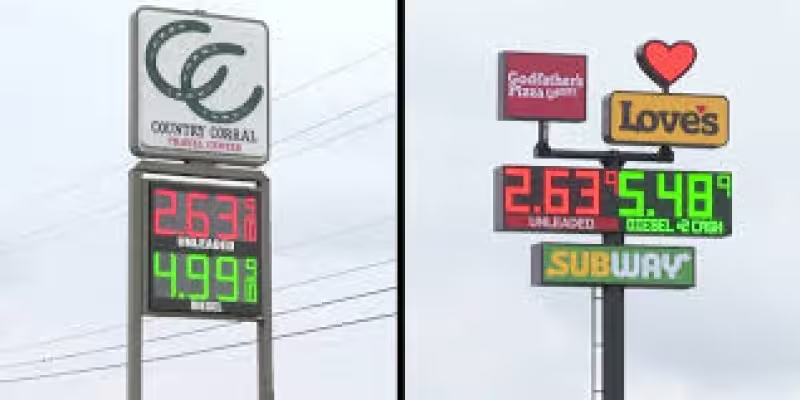
The spike in gas prices since the start of the Iran war is hitting drivers where it hurts most: at gas stations, every day. For Americans who still rely on fossil-fuel cars, the cost of owning and driving one has climbed sharply.
That shift is pushing more attention toward electric vehicles, which have become a more viable alternative over the past several years even though they still make up a relatively small share of cars on America’s roads. A fully electric vehicle runs only on electric motors, which means never stopping at the gas station again. Plug-in hybrids split the difference, with a battery and a gas tank. When the battery is charged, the car runs on electricity; once it runs down, the gas engine takes over.
For many drivers, that middle ground is the point. In most plug-in hybrid models, the electric range is 25 to 35 miles, and some high-end versions can travel more than 50 miles before switching to gas. Traditional hybrids, such as the Toyota Prius, work differently. Their electric and gas engines take turns depending on what the car is doing, with the electric motor usually handling low-speed driving and cruising, and the gas engine stepping in when more power is needed. That still leaves owners making regular stops at gas stations, just less often.



The economics are not as one-sided as the sales pitches sometimes suggest. The best studies have found that the full cost of ownership ends up higher for EVs a little more than half the time. The reason is simple: EVs often come with a much higher sticker price up front, even if charging the battery is substantially cheaper than filling a tank and the vehicles need less maintenance because they have fewer moving parts and do not use engine oil.
Earlier this year, the price gap between EVs and gas cars was about $6,500, according to Kelley Blue Book. That difference helps explain why the choice is rarely just about fuel savings. It is about how long a driver plans to keep the car, how much they drive, and whether they want to trade the certainty of gas station stops for the cost and convenience of charging at home or elsewhere.
For most of history, drivers had no realistic option but to absorb swings in fuel prices. That is no longer true. The next question is not whether gas prices matter, but how many drivers will decide the math has finally changed enough to buy a car that changes the way they live with gas stations entirely.