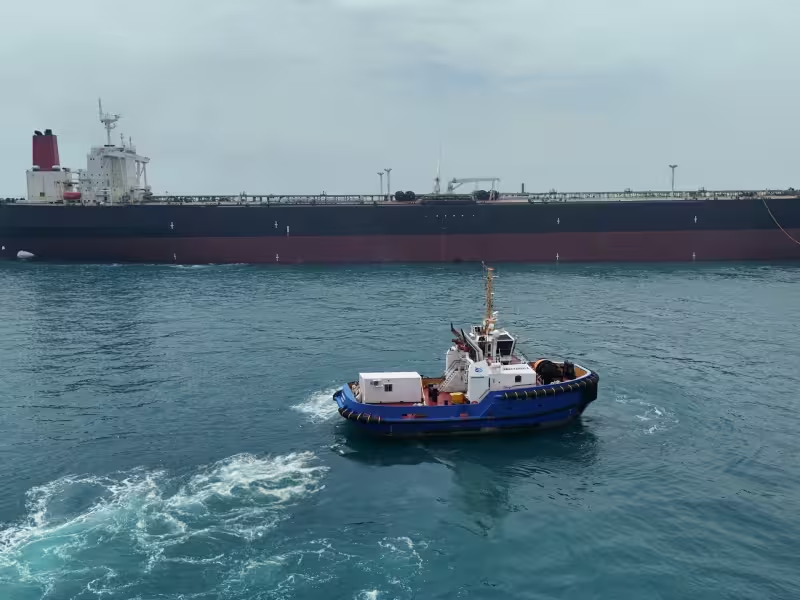
Three Indian nationals were injured when a drone attack hit Fujairah’s petroleum industrial site, and the Fujairah Media Office said all three were taken to hospital with moderate injuries. The UAE Defence Ministry said its air defenses were engaging missile attacks and incoming drones from Iran, while the sounds heard in different parts of the country were the result of intercepts by UAE air defense systems.
The attack landed on a day when Gulf shipping was already under strain. The United Kingdom Maritime Trade Operations said it received a report of a fire aboard a cargo vessel in the Gulf, with the unnamed ship reporting a blaze in its engine room 36 nautical miles north of Dubai, about 58 km, and UKMTO said the cause remained unknown while all crew were safe and accounted for. It also reported another incident west of Mina Saqr.


That pressure at sea is now tied to a broader fight over the Strait of Hormuz. General Mark Kimmitt said ships coming out of the strait would need protection, adding that the U.S. Navy would provide “a protective cordon and escort” as vessels moved through the passage. He said ships would need cover if they were to come through, and described carrier-style protection measures that include counter-drone, anti-aircraft and anti-submarine defenses.
At the same time, Foreign Minister Araghchi said local media reported that a mechanism was being drafted for managing the Strait of Hormuz, and warned that the strait would not return to previous conditions and hostile vessels would not be allowed to pass. The timing of the Fujairah strike, the reported fire near Dubai and the second UKMTO incident suggests the threat is no longer confined to one shoreline or one type of vessel.
For the UAE, the immediate question is not whether the pressure is real. It is how long air defenses and naval escorts can hold open a route that both sides are now treating as a test of control.