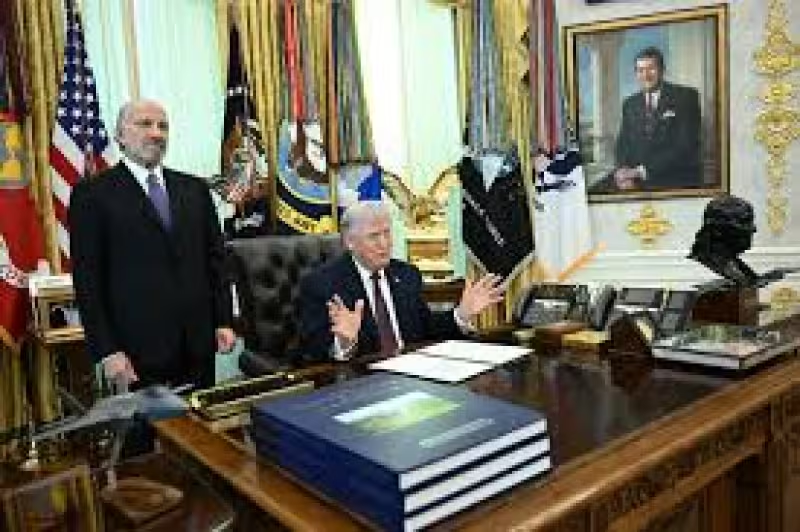
President Donald Trump on Tuesday evening issued an executive order on mail voting that would create three separate lists, but the document does not say how those lists relate to one another. The order also directs the U.S. Postal Service to propose rules by May 30 governing the process of creating List 3.
The White House released a fact sheet on Tuesday that tried to sum up the order, saying, “The Order requires the USPS to transmit ballots only to individuals” on List 3. The executive order itself says the Postal Service “shall not transmit mail-in or absentee ballots from any individual” who is not on List 3.
At the center of the plan is a list of citizens over 18 residing in each state, to be derived from federal citizenship and naturalization records, Social Security Administration records, SAVE data and other relevant federal databases. SAVE is a U.S. Citizenship and Immigration Services database, and the Trump administration overhauled it last year while urging election officials to use it to verify voter citizenship.
Read Also: Donald Trump Spurs Dow Jones Industrial Average 0.3% Gain Ahead



That is where the order runs into its first major problem. Election lawyer Aaron Blacksberg said the document does not explain how the three lists connect, saying, “This executive order doesn’t make clear how the administration will even do what they say they’re doing, which is limiting mail-in voting based on who they say are citizens and eligible voters.”
The gap matters because the order appears to rely on a federal process that many experts and state officials believe the president does not have the authority to mandate. John Davisson, whose concerns reflect that broader criticism, said, “It’s not a feasible thing to do with any accuracy for every citizen in the country over 18.”
Read Also: Jared Kushner joins US delegation for direct Iran talks in Islamabad
Multiple federal lawsuits challenging the executive order have already been filed, putting the fight over Trump mail ballot order on an immediate legal track even before the Postal Service has written the rules it was told to propose by May 30. The outcome now turns on whether the administration can turn a vague directive into a workable system, and whether courts let it try.