The United States and Iran began face-to-face negotiations on Saturday in Pakistan, with Vice President Jd Vance leading the American delegation and Parliament Speaker Mohammad Bagher Qalibaf heading the Iranian side. The talks came days after a fragile two-week ceasefire was announced in a war that had entered its seventh week.
The White House confirmed the direct nature of the talks. Before the face-to-face session, U.S. and Iranian officials met separately with Pakistan’s Prime Minister Shehbaz Sharif, and by 10:21 p.m. local time in Islamabad the trilateral in-person talks were still ongoing.
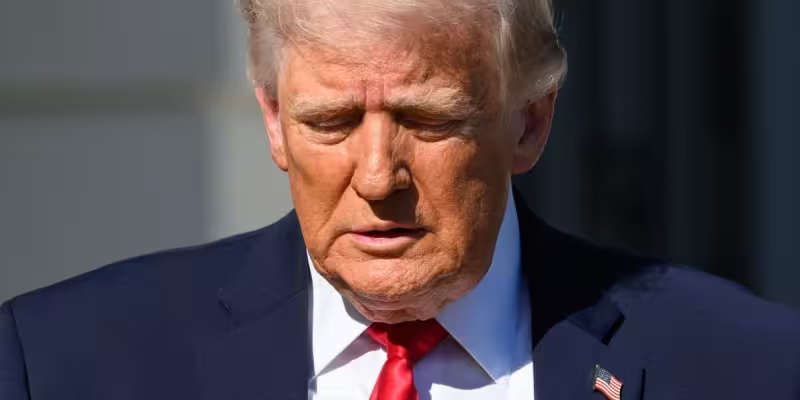
Trump said earlier on Saturday that the outcome did not matter for Washington, saying the United States would win “regardless what happens,” that “maybe they make a deal maybe they don’t,” and that “it doesn’t matter. From the standpoint of America, we win.” He also described the discussions as “very deep negotiations.”
Read Also: John Fetterman rebukes Democrats mocking Trump’s Iran ceasefire deal


The talks were meant to figure out how to advance the ceasefire, but the deal was already under strain from deep disagreements and Israel’s continued attacks against the Iranian-backed Hezbollah in Lebanon. The war has killed thousands of people and shaken global markets, and the death toll in Lebanon from Israeli strikes in the fighting between Israel and Hezbollah had risen further.
The narrow mouth of the Persian Gulf, through which 20% of all oil and natural gas traded once passed, remained effectively closed to most freighters carrying oil and gas out of the region. Trump said the U.S. military was searching for mines in the Strait of Hormuz, while Iran’s Ministry of Transport announced on Saturday the full resumption of maritime navigation activities effective Sunday from 6 a.m. to 6 p.m. for all categories of marine vessels and transport modes.
Read Also: Jared Kushner joins US delegation for direct Iran talks in Islamabad
That claim was immediately undercut by a spokesperson for Iran’s joint military command, who denied an earlier U.S. assertion that two Navy destroyers had transited the waterway and said the “initiative over the passage of any vessel rests with the armed forces of the Islamic Republic of Iran.” With the talks still running in Islamabad and the waterway still largely shut, the ceasefire now depends on whether the two sides can turn a meeting into movement.