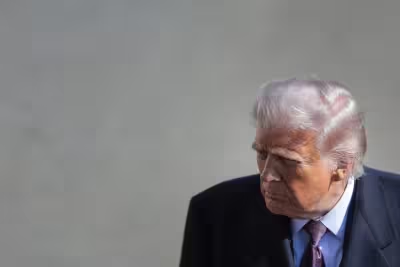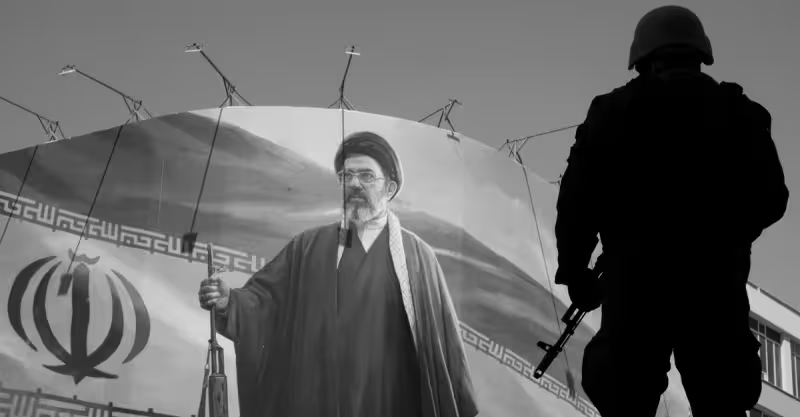
J. D. Vance is set to lead talks with Iran in Islamabad, a meeting that could become the most senior in-person engagement between the United States and Iran since the 1979 revolution if he sits down with Mohammad Baqer Qalibaf as intended. For Donald Trump, it would bring a war he launched to break Iran’s power to a politically charged pivot point: a cease-fire that has not ended the fight over who pays for it.
Trump had spent $50 billion on the war by the time of this article, and Iran’s Islamic Republic is still standing. That leaves Tehran with leverage over more than the battlefield. It also leaves Vance, the vice president, carrying a negotiation that could shape Trump’s legacy and his own political future, with the president making clear where the blame or the credit would land. “If a deal doesn’t happen, I’m blaming J. D. Vance,” Trump said. “If it does happen, I’m taking full credit.”
The talks matter because they are happening now, after a war that failed to deliver the result Trump sought. In 2013, Barack Obama spoke briefly by phone with Iranian President Hassan Rouhani, but the two never met. This time, if Vance and Qalibaf meet, it would be the first most senior face-to-face engagement between the two countries since 1979, and it would come with both sides looking for an exit rather than a breakthrough.
Read Also: Donald Trump Spurs Dow Jones Industrial Average 0.3% Gain Ahead



Iran’s leaders see Vance as the anti-war voice in MAGA and believe he is less sympathetic to Israel than Steve Witkoff or Jared Kushner. They also think he has a strong incentive to resolve the conflict quickly because of his presidential ambitions. Trump once described Qalibaf as one of Iran’s “more moderate” leaders, a rare compliment that now sits inside a far more dangerous political bargain.
The friction point is not nuclear, but economic. Iran closed the Strait of Hormuz as part of its leverage strategy, and the bottleneck showed how quickly pressure can spread beyond the region. Before the war, more than 100 vessels transited the strait daily. On April 8, just four ships passed through. The waterway carries nearly a quarter of the world’s seaborne oil and a fifth of its natural gas, which is why the cease-fire remains tenuous and why the talks in Islamabad will test whether either side can turn military damage into a workable deal.
Read Also: Israel Says No Ceasefire Expected in Coming Days
For Trump, the answer is already embedded in the war’s cost and its outcome. He went in to break Iran’s power, spent billions doing it, and ended up with an Islamic Republic still intact and a vice president sent to negotiate with the same adversary. If Islamabad produces a deal, Trump will claim the win. If it does not, he has already named the person who will be blamed.