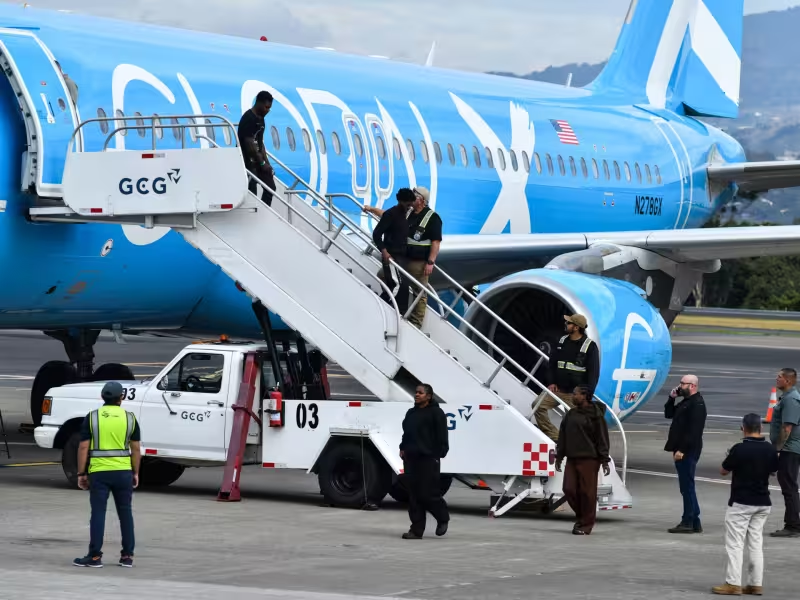
About 25 migrants deported from the United States landed in San Jose on Saturday, becoming the first group sent to Costa Rica under a new third-country transfer deal. The flight brought citizens of Albania, Cameroon, China, Guatemala, Honduras, India, Kenya and Morocco.
The arrival puts Costa Rica at the center of a policy Washington has used to move migrants whose own governments will not take them back. Under the March agreement, the country can receive up to 25 deportees a week, with the United States providing financial support in return.
Costa Rica’s General Directorate of Migration and Foreigners said the group would get primary care from the Professional Migration Police with help from the International Organization for Migration. The IOM will provide food and accommodation for the first seven days of their stay. Officials also said Costa Rica can reject deportees on a case-by-case basis and will not send people back to places where they may face persecution.
Read Also: Emergency Management Agency approves disaster aid for seven states



Foreign Minister Marioa Zamora Cordero said earlier that “Costa Rica is prepared to see this flow of people.” The country has dealt with a similar influx before: in 2025, it accepted up to 200 migrants deported by the United States and later granted special migratory status to 85 of them who could not be repatriated to their home countries.
The program has drawn criticism, including in a February report produced by Democrats on the Senate Foreign Relations Committee, which said the arrangement could channel more than $1 million in taxpayer money per deportee. The United States has also signed similar agreements with Dominica, Guyana, Honduras, Rwanda, St. Kitts and Nevis and South Sudan.
Read Also: United States Congress shutdown deal leaves Democrats claiming a win
Homeland Security Secretary Kristi Noem has defended the approach, saying, “We are very proud to have partners like President [Chaves] and Costa Rica, who are working to ensure that people who are in our country illegally have the opportunity to return to their countries of origin.” The next test is whether Costa Rica, which says it will decide each case individually, can keep the process moving without becoming a long-term landing place for people no other country will take.