
A levee break at the Little Black River prompted an evacuation order for parts of Cheboygan on Tuesday afternoon as water rose rapidly at the Cheboygan dam and officials braced for a possible failure. By Tuesday evening, authorities said topping was expected and the water stood about seven inches below the top of the dam.
The warnings landed as residents watched water climb in real time. Laurie Romanow said it “freaks me out because I didn’t expect the water to go up six inches last night,” and added that the flooding felt unlike anything she had seen in a lifetime in the city. “Never. I was born here in 1961. My family was at that house for 125 years. It’s never looked like this,” she said.
That urgency was matched by the response on the ground. Two 24-inch pumps arrived late Monday night and were brought in on Tuesday, joining six- and eight-inch pumps already in place. Michigan Department of Natural Resources officials said they were bringing in four 18-inch pumps, two 16-inch pumps, three 12-inch pumps and four 10-inch pumps. Crews also removed six gates with a crane as they tried to control the rising water.
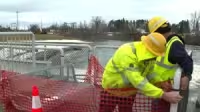

Officials said in a Tuesday evening briefing that they had no estimate of the potential economic impact if the dam fails. The National Weather Service said more rain was expected overnight in the area, adding pressure to a system already under strain. An update on the pumps and the flood threshold was also posted in a Cheboygan Dam Update, as crews kept racing the water.
The Cheboygan area was already under a state of emergency after Governor Gretchen Whitmer issued one last week, and part of the area remained in a Ready zone under the Ready, Set, Go system. Ready means the water is 12 inches below the top of the dam. Emergency alerts told people that all roads in the county were covered with water and urged drivers to slow down to avoid hydroplaning.
Consumers Energy said it was monitoring the situation and may proactively shut off power in parts of the area. For Cheboygan, the immediate question is no longer whether the water is rising; it is whether the dam can hold through the night while more rain falls and crews keep adding pumps.