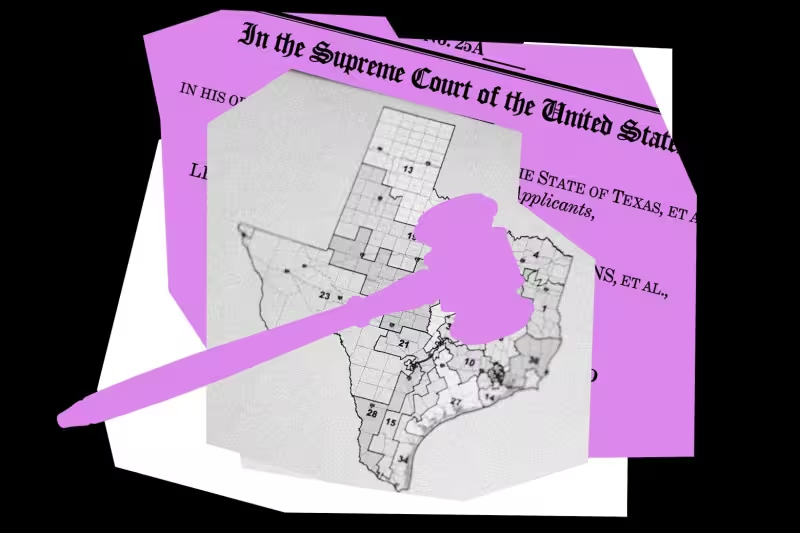
The Supreme Court on Monday gave Texas the greenlight to use its gerrymandered electoral maps in the 2026 midterms, reversing a lower court ruling that said the state had unconstitutionally diluted the voting power of racial minorities in newly drawn districts.
The 6-3 decision came on the court’s shadow docket and put an end, for now, to a legal fight over maps shaped during a midcycle redistricting push that was designed to create as many Republican-leaning seats as possible and as few Democratic ones as possible. The lower court opinion had been written by a Trump appointee after a nine-day trial that featured dozens of experts and more than 3,000 pages of evidence.

Justice Samuel Alito wrote a concurrence joined by Justices Clarence Thomas and Neil Gorsuch, saying the lower court had “failed to honor the presumption of legislative good faith” that the Texas Legislature had earned. That view carried the day. The majority left standing a map that plaintiffs had argued was built by spreading Black and Hispanic voters away from one another to weaken their influence.
The dispute is the latest flashpoint in the state-by-state gerrymandering wars, where political line-drawing is generally allowed but race cannot be the predominant factor. Texas usually redraws its maps once a decade after the census, but this fight began in 2025 after a letter from the Trump administration said the state had unconstitutionally used race in its 2021 maps and needed to redistrict to correct that. President Donald Trump then asked Texas to rewrite the maps midcycle to try to win more safe seats for the GOP, and the state moved ahead with a new plan that was challenged in federal court.
The Supreme Court had already stayed the district court’s ruling in December, allowing the new Texas map to take effect while the case moved forward. Monday’s order makes that temporary win permanent for the 2026 midterms unless the justices revisit the fight later. For now, Texas has the map it wanted, and the court has signaled that it is willing to let the political map stand even after a lengthy trial record pointed the other way.