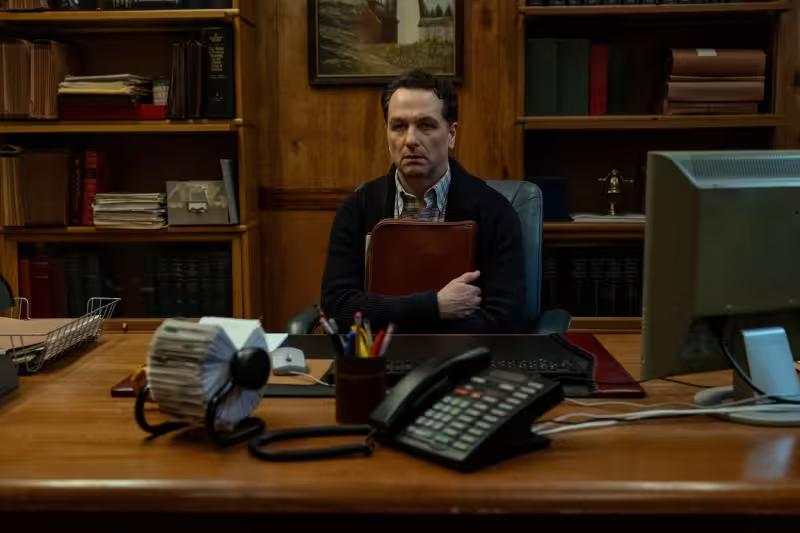
Apple TV+ drops the first two episodes of Widow’s Bay on Wednesday, introducing a New England island town where a new mayor is trying to sell a haunted past as a future. Matthew Rhys plays Tom Loftis, the town’s new mayor, and he wants Widow’s Bay to become a tourist destination.
That pitch lands in a place built on old money, old families and older stories. Widow’s Bay is a quaint island town in New England populated by working-class locals and families that have been there for several generations, with a historical center dedicated to preserving the Widow’s Bay legacy. Back in the 1800s, the town had a cannibalism-in-the-church incident, and the history does not stay buried. The series also includes a haunted inn, a legendary sea hag that targets Loftis, a vintage book on throwing a party with Eisenhower-era drawings that has a secondary agenda, and even a reanimated corpse.

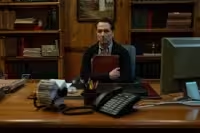
Creator Katie Dippold and her collaborators frame all of that with a tone that leans both ways at once. The show is being described as Parks & Recreation meets Stephen King, and that mix shows up in the town office as much as in the shadows. Kate O’Flynn plays Patricia, Loftis’s mousy and socially awkward deputy, while Dale Dickey appears as a flinty veteran, Jeff Hiller as a perpetually bewildered clerk and Stephen Root as an old salty dog. The result is a workplace comedy built inside a cursed shoreline story, with Matthew Rhys trying to make the case that the town can be remade into something people will pay to visit.
That is the central idea behind the show’s setup, and it is also the pressure point. Tom Loftis would settle for Widow’s Bay becoming the new Bar Harbor, but the town’s economy is struggling for reasons that seem tied to its own history as much as to its present. The very past Loftis wants to market is the one that keeps pushing back, whether through the legacy-preserving historical center, the sea hag, or the series’ more outlandish threats. If the first two episodes are any guide, Widow’s Bay is not asking whether the town can be sold. It is asking whether the town will let itself be reinvented without exacting a price.