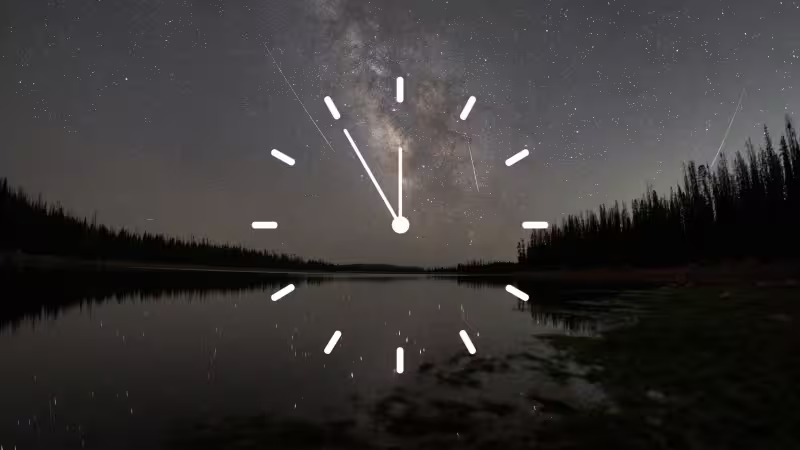
The Eta Aquarid meteor shower reaches its broad peak overnight on May 5-6, with the best chance to spot shooting stars coming in the predawn hours of May 6. In the northern hemisphere, that may still mean only 10 to 30 meteors an hour under good conditions, and moonlight could push that number under 10 sightings per hour.
The shower is active from April 19 through May 28 in 2026, but the timing of the peak matters most because the Eta Aquarids’ radiant climbs to its highest altitude for northern viewers just before dawn on May 6. The shower’s radiant is in Aquarius, which rises above the eastern horizon to the left of the waning moon roughly three hours after midnight for stargazers in the U.S.
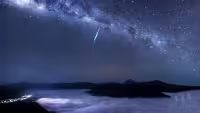
The moon will make the display harder to see. An 84%-lit lunar disk rises above the southeastern horizon shortly after midnight on the night of May 5-6, and its light may wash out the dimmer meteors that would otherwise be visible. The result is a sky that can look busy on paper but muted in practice, especially outside the southern hemisphere tropics, where ideal conditions can bring as many as 50 meteors an hour.
That uneven viewing is a defining feature of the Eta Aquarids each year. They are associated with debris shed by Halley’s Comet, and they are known for leaving persistent glowing trains in their wakes. For skywatchers trying to catch the display from the United States, the practical goal is not to count every streak but to be outside before dawn, facing the eastern sky, and ready for the brief flashes that get through the moonlight.
A smartphone astronomy app such as Stellarium or SkySafari 7 Pro can help locate Aquarius and the shower’s radiant. This year’s answer to the obvious question is simple: yes, the Eta Aquarid meteor shower is worth watching, but the moon will make the show better for some observers than others, and the strongest display will remain where the sky is darkest in the southern hemisphere tropics.