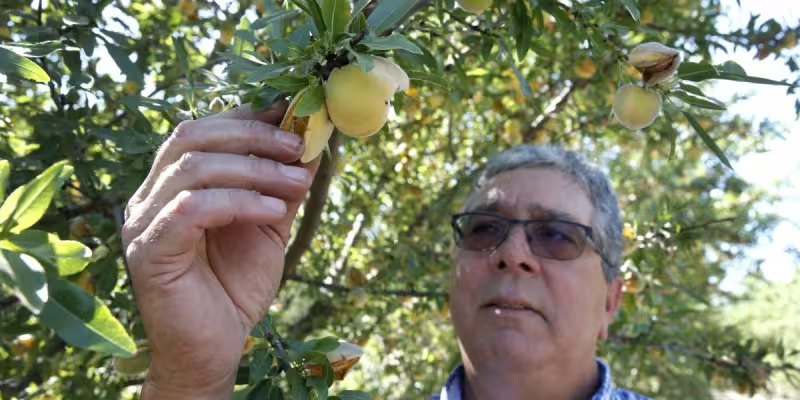
Central California farmers are weighing whether to destroy about 3,000 acres of orchards, or about 420,000 clingstone peach trees, after Del Monte Foods shut canneries that once bought much of their crop. The USDA has approved $9 million in federal aid to help growers remove the trees and shift to more valuable crops.
The money is a small but immediate response to a problem that has been building for months. The Modesto Del Monte plant processed between 30% and 35% of California's cling peaches before the earlier closure in 2025, and the company shut its canneries in Modesto and Hughson last month, leaving farmers without a major buyer for fruit that takes years to replace.
California growers and state lawmakers had been pressing Washington to act since March, when more than 40 California lawmakers wrote to Agriculture Secretary Brooke Rollins seeking help for peach farmers. Shannon Douglass, whose family has been among the growers affected, said the federal aid offers a glimmer of hope after a devastating period, because it could help farmers transition to new crops and stay on their land.


The urgency is sharpened by the economics of the orchards themselves. The peach trees involved can take years to cultivate and typically last about 20 years, which means ripping them out is not a simple seasonal decision but a long-term reset for farms built around Del Monte's demand.
Del Monte Foods filed for bankruptcy in July 2025, and court filings said California peach farmers had long-term contracts to supply fruit to the company. Those lost contracts are worth more than $550 million, according to the filings. California Sen. Adam Schiff said USDA analysis found that removing 50,000 tons of peaches from production could save farmers about $30 million in projected losses.
For some growers, the choice is already personal. Tony and Laura McGrath of Yuba County had 40 acres of peach trees, including 12 acres of Andross peaches under contract with Del Monte for another decade. Their situation captures the larger problem now facing the state's cling peach industry: the buyer disappeared, but the trees are still in the ground.
Del Monte was a nearly 140-year-old California food producer and distributor that struggled as customers moved away from canned fruits and vegetables toward fresh produce, while higher operating costs, including tariffs on imported steel used in cans, added pressure. The federal aid may soften the blow, but it does not restore the market that kept these orchards alive.