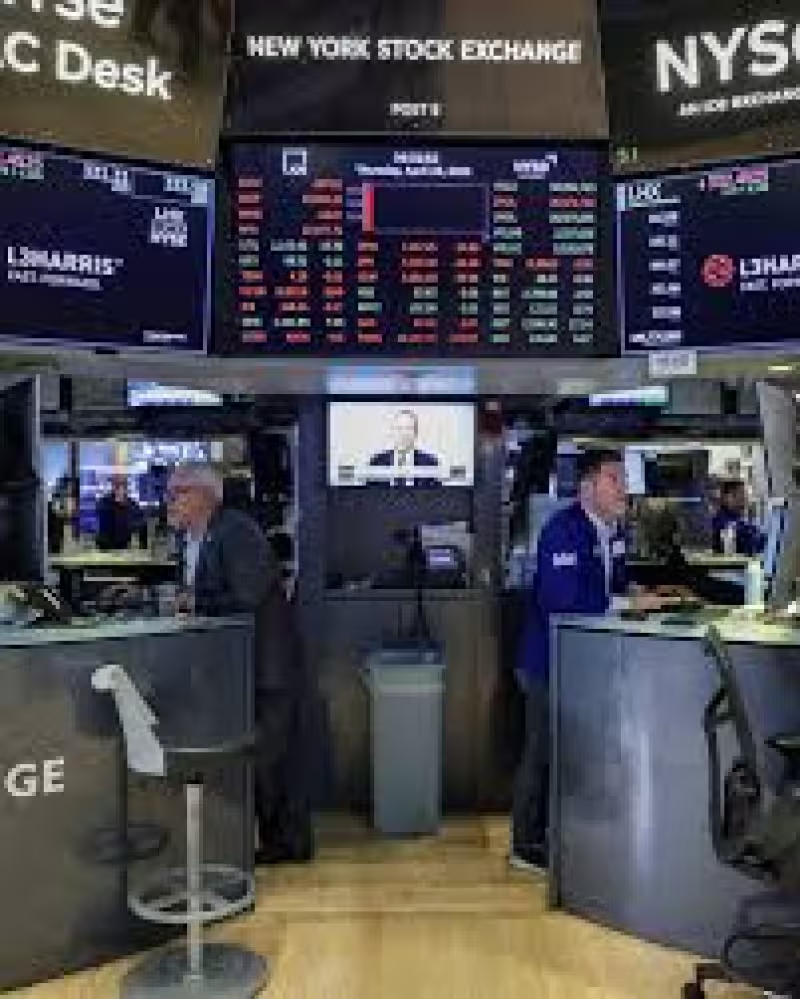
Wall Street fell Thursday after progress in US-Iran peace talks stalled, pulling the S&P 500 down 0.4% and the Dow Jones Industrial Average about 0.4% lower. The Nasdaq Composite shed 0.9% as investors moved away from stocks tied to riskier growth bets and into oil-linked names.
Oil rose for a fourth day after Iran and the US failed to meet for further peace talks. Brent crude futures moved back above $105 per barrel, while West Texas Intermediate crude topped $96. The move added fresh fuel to war-stoked inflation worries that had already been weighing on sentiment, even after the S&P 500 set a record the day before.
The pullback hit software hardest. ServiceNow sank more than 16% despite an upbeat earnings report, and IBM slid over 8% as slowing revenue growth stoked concern that Anthropic’s AI tools could disrupt its business. The broader software sector dropped roughly 5% as investors punished the two companies’ results, a sharp reminder that in finance, good numbers alone were not enough if the market thought the next quarter looked less secure.



Tesla also turned lower despite an earnings beat after Elon Musk signaled a massive capital expenditure push. Across the market, traders were trying to balance that corporate spending story against a darker geopolitical one, after Axios reported Iran plans to deploy more mines around the Strait of Hormuz. That kept supply concerns front and center just as US-Iran peace talks remained in limbo.
Even so, not every corner of the market blinked. Texas Instruments is on track for its seventh record close of 2026 and its fifth straight weekly gain, with the stock having added about $83 billion in market value since March 30. The PHLX Semiconductor Index is also heading toward a 17-day winning streak, showing that some parts of the chip trade are still attracting buyers even as the wider market wobbles.
For homeowners watching rates and the broader finance backdrop, the same mix of inflation fears and bond-market caution has helped keep borrowing costs sticky, as recent coverage on refinance trends has shown. Thursday’s selloff suggested investors were still treating the conflict risk as more than a headline, with oil, software and megacap tech all moving in the same uneasy direction.