Iran said Wednesday that a US proposal to end the war was still being considered, even as President Donald Trump said the two sides had held “very good talks with Iran in the last 24 hours” and that a deal was possible.
Axios reported that the White House believed it could be closing in on a 14-point memorandum of understanding with Iran, a one-page outline that could serve as a framework for more detailed nuclear negotiations. said two sources briefed on the mediation between the US and Iran confirmed the information initially reported by Axios, though the proposal has not been publicly outlined.
The apparent progress matters because Iran’s nuclear programme has been one of the key sticking points between the two sides. Under the reported memo, provisions would include a suspension of Iranian nuclear enrichment, lifting sanctions and restoring free transit through the Strait of Hormuz. Those terms, if they were ever formalized, would reach far beyond a simple pause in fighting and into the structure of the wider dispute.



Tehran, however, is not treating the reported framework as a finished deal. Foreign ministry spokesman Ismail Baghaei said the American proposal was still under review and that Iran would inform the Pakistani side of its views after completing that review. A senior parliament member, Ebrahim Rezaei, went further, dismissing the reported memorandum as a “wish list” and saying “the Americans will not gain anything in a war they are losing that they have not gained in face-to-face negotiations.” He added that Iran “has its finger on the trigger and is ready,” language that underscored how far the two sides remain from the calm tone of a negotiated settlement.
Pakistan has emerged as the conduit for those exchanges. Foreign Minister said his country was “endeavouring to convert this ceasefire into a permanent end to this war,” while Baghaei said Tehran would share its views with Pakistani mediators. That channel has become more important after Trump on Tuesday announced he was pausing Project Freedom, the operation meant to help restore the flow of oil and the global economy’s eventual return to normalcy by guiding stranded ships out of the Gulf through the Strait of Hormuz. The timing suggests Washington is testing whether pressure, mediation and a ceasefire can be turned into something more durable.
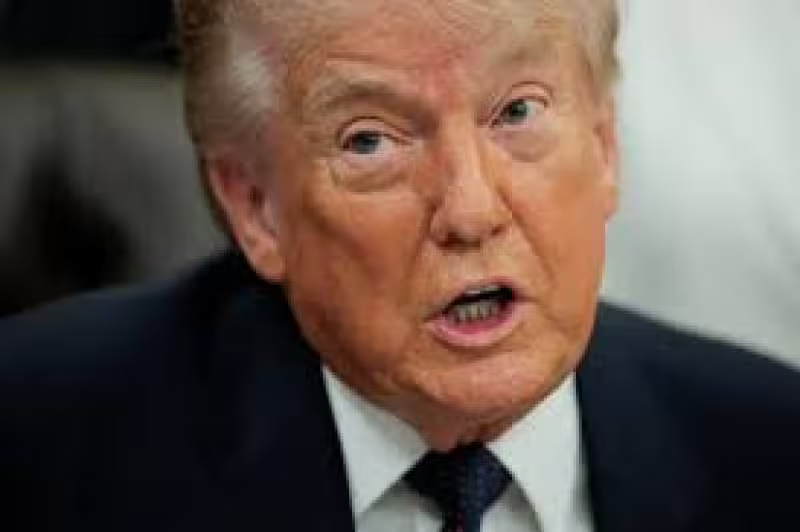
Trump said Iran had agreed to “never have a nuclear weapon” among other things and warned that if Tehran did not agree to a deal, “the bombing starts,” adding that it would come “at a much higher level and intensity than it was before.” He also said, “assuming Iran agrees to give what has been agreed to,” and declared, “I think we won.” For now, the gap between those words and the Iranian response remains wide, and the next step is whether the Pakistani channel can turn a reported outline into a public agreement both sides will actually sign onto.